

A world comprehensive of futuristic ideologies and opinions presented across screens through tweets, reviews, comments and feedback forms is the world of digital media. And the one pulling the strings in this world is a technology called Sentiment Analysis. Powered by Natural Language Processing (NLP), sentiment analysis facilitates connection between machines and human emotions. It helps to decipher attitudes and determine expressions like positive, negative or neutral. A handy tool in tracking behavioural patterns, sentiment analysis is imperative for brand reputation, market research and customer service.
Therefore, this blog aims to unpack the many nuances of sentiment analysis, from its mechanism, applications, challenges to the important difference between sentiment and semantic analysis.
Sentiment Analysis – An Introduction
Sentiment analysis is a machine-learning and NLP-based method used to determine the emotional tone behind a body of text. It examines words, sentence structure, expressions, and linguistic cues to understand whether the sentiment is positive, negative, or neutral.
“Sentiment analysis is the contextual meaning of words that indicates the social sentiment of a brand and also helps the business to determine whether the product they are manufacturing is going to make a demand in the market or not.” – GeekforGeeks
How NLP Powers Sentiment Analysis
At its core, this analysis uses Natural Language Processing (NLP) to make sense of human language. NLP helps computers:
- Read text like humans
- Break it down into parts (tokenization)
- Understand grammar and structure
- Identify context
- Interpret emotional cues
Key NLP Techniques Used in Sentiment Analysis

1. Tokenization
Splitting the text into small units, words, phrases, or subwords, to process them individually.
2. Lemmatization and Stemming
Reducing words to their root forms:
- “Running” → “run”
- “Better” → “good” (contextual via lemmatization)
3. Part-of-Speech Tagging
Identifying nouns, verbs, adjectives, useful since adjectives often carry sentiment (great, horrible, amazing).
4. Dependency Parsing
Understanding how words relate:
- “The service wasn’t good” → Negative sentiment
- “Not only good, but excellent” → Positive sentiment
5. Machine Learning & Deep Learning Models
Modern systems use:
- Logistic Regression
- Naïve Bayes
- LSTM networks
- Transformers (BERT, DistilBERT, GPT-based models)
These models capture deeper context, allowing more accurate sentiment predictions.
Applications of Sentiment Analysis
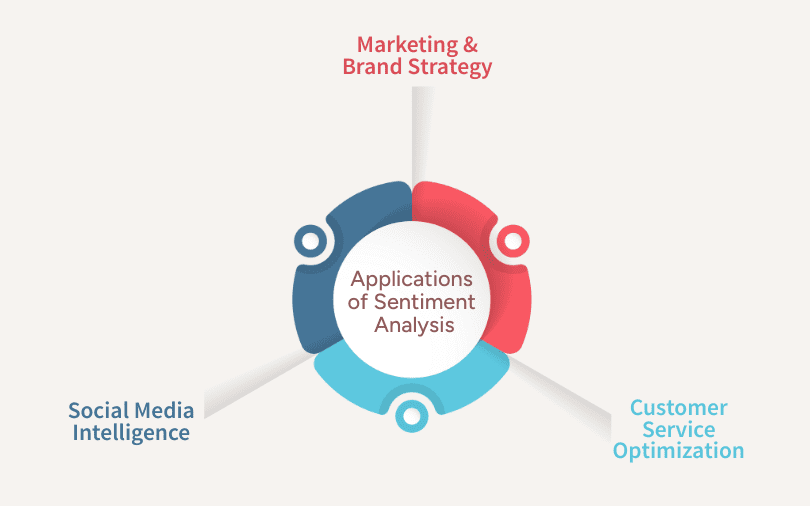
Sentiment analysis has become indispensable across industries. Here are the key areas where it creates real value:
1. Marketing & Brand Strategy
Marketing teams use sentiment analysis to measure how audiences feel about:
- Campaigns
- Product launches
- Brand messaging
- Competitors
- Market trends
By analyzing social media conversations, survey responses, or brand mentions, marketers can quickly detect shifts in public perception and adjust strategies.
Nike’s Example: Listening to the Voice of the Customer
Nike actively monitors social sentiment across all major platforms. When they launched campaigns like “Nike Dream Crazy”, sentiment analysis played a major role in understanding reactions across diverse audience groups.
Despite polarizing opinions, Nike discovered strong positive sentiment among its core customer base, and used that insight to strengthen brand loyalty. By analysing millions of tweets, Instagram comments, and posts, Nike learned:
- Supporters resonated with empowerment messaging
- Young audiences connected strongly with purpose-driven storytelling
- Negative sentiment came largely from audiences outside its target demographic
This real-time reading of emotional behaviour helped Nike boldly reinforce its brand voice.
2. Social Media Intelligence
Every social media platform is a sentiment goldmine. Brands use automated tools to:
- Track trending sentiments
- Spot negative spikes (crisis detection)
- Identify unexpected customer pain points
- Discover emerging trends
- Analyse influencer impact
For example, if a user posts: “The camera quality on this phone is so disappointing,”
This analysis instantly flags it as negative and categorizes it into a relevant product issue.
3. Customer Service Optimization
Sentiment analysis transforms customer support by:
- Identifying angry or frustrated customers in real time
- Prioritizing negative complaints
- Routing messages to the right teams
- Analysing support transcripts for agent performance
- Understanding recurring issues through aggregated analysis
Call centres and support bots use sentiment scoring to tailor responses:
- Positive sentiment → Reinforce satisfaction
- Negative sentiment → Escalate to a human agent
- Neutral sentiment → Provide factual responses
This creates a smoother, more empathetic service experience.
Challenges in Sentiment Analysis
While powerful, sentiment analysis still faces complex challenges:
1. Sarcasm and Irony
“Great, my order arrived broken!” Requires deep contextual understanding, not just word matching.
2. Cultural Nuances
Phrases that seem neutral in one culture may imply negativity in another.
3. Ambiguous Text
“This phone is sick.” Positive in slang, negative in literal meaning.
4. Mixed Sentiments in One Sentence
“The design is beautiful, but the battery life is terrible.” Models must classify dual sentiments accurately.
5. Domain-Specific Language
Words change meanings in different industries.
Example: “Explosive growth” (positive in business) vs. “explosive device” (negative in security).
6. Data Quality Issues
Slang, typos, emojis, and short-form text challenge machine-learning models. Improving models requires large, high-quality datasets and robust training techniques.
Sentiment Analysis vs Semantic Analysis
Although often confused, the two serve very different purposes.
What Is Sentiment Analysis?
It focuses on emotion. It answers:
- Is the user happy, sad, angry, frustrated, or neutral?
Example:
“I hate the new update.” → Negative sentiment
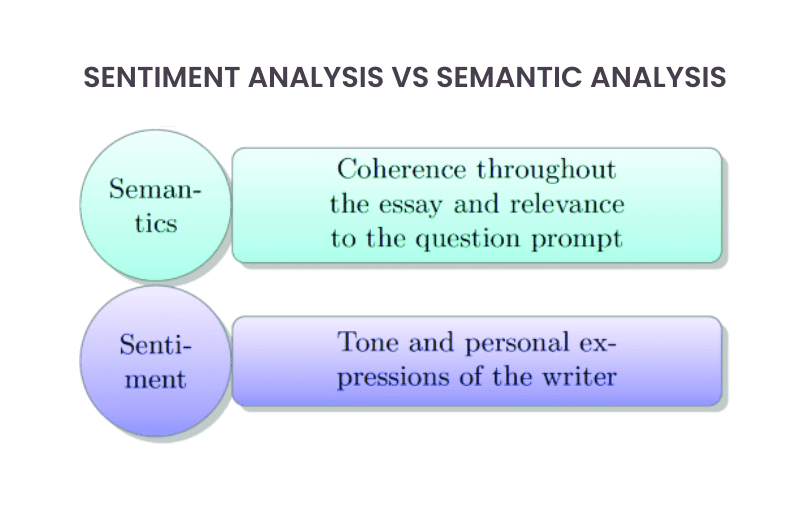
What Is Semantic Analysis?
Semantic analysis focuses on meaning and intent, not emotion. It interprets:
- Context
- Concept relationships
- Real intentions
- Subject matter
Example: “The battery drains quickly.”
Sentiment: Negative
Semantic meaning: Device has battery performance issues
Semantic analysis helps discover topics, themes, and root causations, not just emotional reactions.
Key Differences
| Aspect | Sentiment Analysis | Semantic Analysis |
| Purpose | Detects emotion | Understands meaning |
| Output | Positive/Negative/Neutral | Topics, entities, context |
| Focus | Tone | Content |
| Example | “I dislike this feature.” → Negative | Meaning relates to product usability |
Both are often used together to create complete customer-intelligence systems.
Conclusion
Sentiment analysis has grown from a simple marketing tool to a multi-industry intelligence engine. Powered by NLP, it allows brands to decode emotions at scale, understand audience behaviour, predict trends, and improve customer experiences. Whether it’s Nike analysing public responses, customer support systems detecting frustration, or marketing teams studying campaign reactions, sentiment analysis provides a lens into how people feel, not just what they say.
As tools evolve, especially with transformer-based models, sentiment analysis will only grow more accurate, nuanced, and indispensable in shaping brand strategy and customer understanding.