

Every time one thinks of a job switch, they start searching for it on Linkedin, but linkedin is not only a platform to search or post about jobs it has become a powerful platform where professionals –
- Share insights about their business or industry
- Publish valuable and educational content
- Highlight achievements and professional milestones
- Provide business or educational tips
- Discuss real life professional experiences
Today, Linkedin has become a professional ecosystem where individuals and businesses share knowledge, build credibility, and create meaningful connections.

Understanding the Diversity of LinkedIn Content
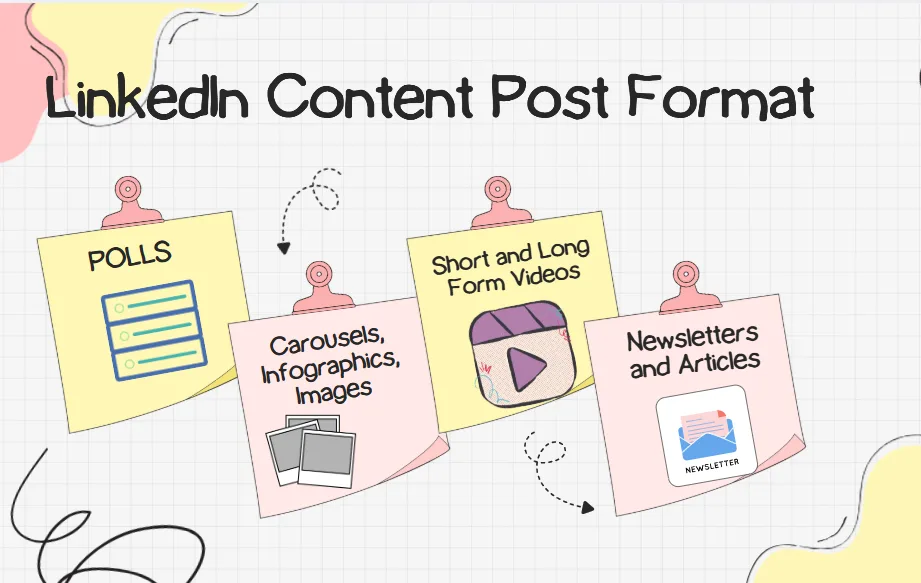
Every professional on LinkedIn brings a unique personality, perspective, and area of expertise. As a result, posts vary widely in style, tone, and structure. Some people prefer storytelling, while others share direct tips, industry updates, or thought provoking opinions through polls, carousels, short videos, text posts, images, infographics, newsletters, and articles.
However, despite the differences in writing style or format, one important principle remains consistent across successful LinkedIn posts, the focus on providing value.
How to Structure a LinkedIn Post
While there is no specific way for writing a Linkedin post, many effective post follow a simple and clear structure –
Hook
The start or opening line of a post is very important because a strong hook captures the reader’s attention and encourages them to read more.
A hook can include:
- A thought provoking question
- An interesting fact or statistic
- A relatable professional challenge
- A bold or surprising statement
Main Content
After the hook, the main content should clearly be about the idea, story and insight.
Effective LinkedIn posts usually follow these principles:
- Keep paragraphs short and easy to read in the initial stages, once you start posting regularly and have enough audience, you can start with long form content as well.
- Focus on one clear idea or lesson
- Make the content informative
Posts that are simple, clear, and practical often perform better because they respect they are real and readers can connect with the stories.
Engagement
Linkedin is to encourage professional discussions and posts that are open for opinions or questions have usually higher engagement than the normal posts. Common ways to encourage engagement-
- Asking readers for their thoughts
- Inviting others to share similar experiences
- Starting a discussion about an industry trend
Simple questions like “What do you think?” or “Has this happened to you as well?” can help initiate meaningful conversations.
When Is the Best Time to Post?
When it comes to getting your LinkedIn post noticed, timing really matters. Since linkedin is used by professionals, these time slots align with when professionals typically check LinkedIn during work breaks or before starting their day.
Posting very late at night or during weekends may result in lower reach, although the ideal timing can vary depending on the target audience and industry.
The most effective times to post are:
- Tuesday to Thursday mornings (8 AM – 11 AM)
- Early afternoon (12 PM – 2 PM) – Tapilo
How to Manage LinkedIn Effectively
Sharing insights is only one part of building a presence on Linkedin, but managing it- it needs strategy. Maintaining consistency and keeping track of the performance helps you understand what is working for your audience .
Practices that help manage LinkedIn effectively include:
- Maintain Consistency
- Engage With the Network
- Optimize the Profile
- Share Meaningful Content
- Use Visual Content
- Build Authentic Connections
- Track Post Performance
The Importance of Authenticity
Everyone is so obsessed with perfection that professionals try to modify their stories according to it. One of the biggest misconceptions is PERFECTION (perfectly written posts and highly polished) but what actually matters is AUTHENTICITY (the real and raw stories that everyone connects to)
Professionals who share honest insights, real experiences, and practical lessons tend to build stronger connections with their audience. Instead of trying to sound overly formal or corporate, maintaining a clear and genuine voice helps build trust and credibility.
From Posting to Professional Recognition: An Example
Consider the case of Riya, a young finance professional who wanted to build her professional presence online. Things started to change when she began exploring LinkedIn’s starter and demo resources to better understand how the platform works.
She started sharing weekly posts explaining financial concepts in simple language and occasionally wrote about lessons from her work experience. She also began commenting on posts from industry leaders and interacting with her network.
Within six months, her posts started receiving consistent engagement. Recruiters and professionals from her field began connecting with her, and she even received invitations to speak at small online webinars. Her growth on LinkedIn came not from viral posts, but from consistent, valuable contributions to her professional community.
Conclusion
LinkedIn serves as an effective tool when approached with a clear strategy. By regularly sharing relevant content, maintaining steady engagement with your connections, and ensuring your profile accurately reflects your professional experience, you can enhance your credibility and broaden your network.
Successful management of LinkedIn focuses less on flawless presentation and more on authenticity, consistency, and meaningful participation in important discussions.