Brand Launch Strategy: How to Relaunch a Brand Without Losing Trust
“Brands don’t just evolve to survive, they evolve to stay meaningful.” Get my free ProposalCall Now
Every brand reaches a point where it must ask itself a crucial question: Does my current identity still resonate with the audience I want to reach? Markets shift, consumer preferences mature, and industries transform faster than ever before. When a brand’s positioning no longer aligns with expectations, it risks becoming irrelevant, even if its products remain strong.
This is where Brand Launch & Re-Positioning Strategy becomes essential. Relaunching a brand is not about changing your logo or tagline overnight. It is a structured process that reshapes perception, strengthens trust, and realigns the brand with current and future opportunities.
A successful brand launch or repositioning demands strategy, clarity, and storytelling, while ensuring existing customers do not feel alienated. In this article, we unpack its importance, study a powerful Indian example, and understand how Pluralis Digital empowers brands to relaunch with impact.
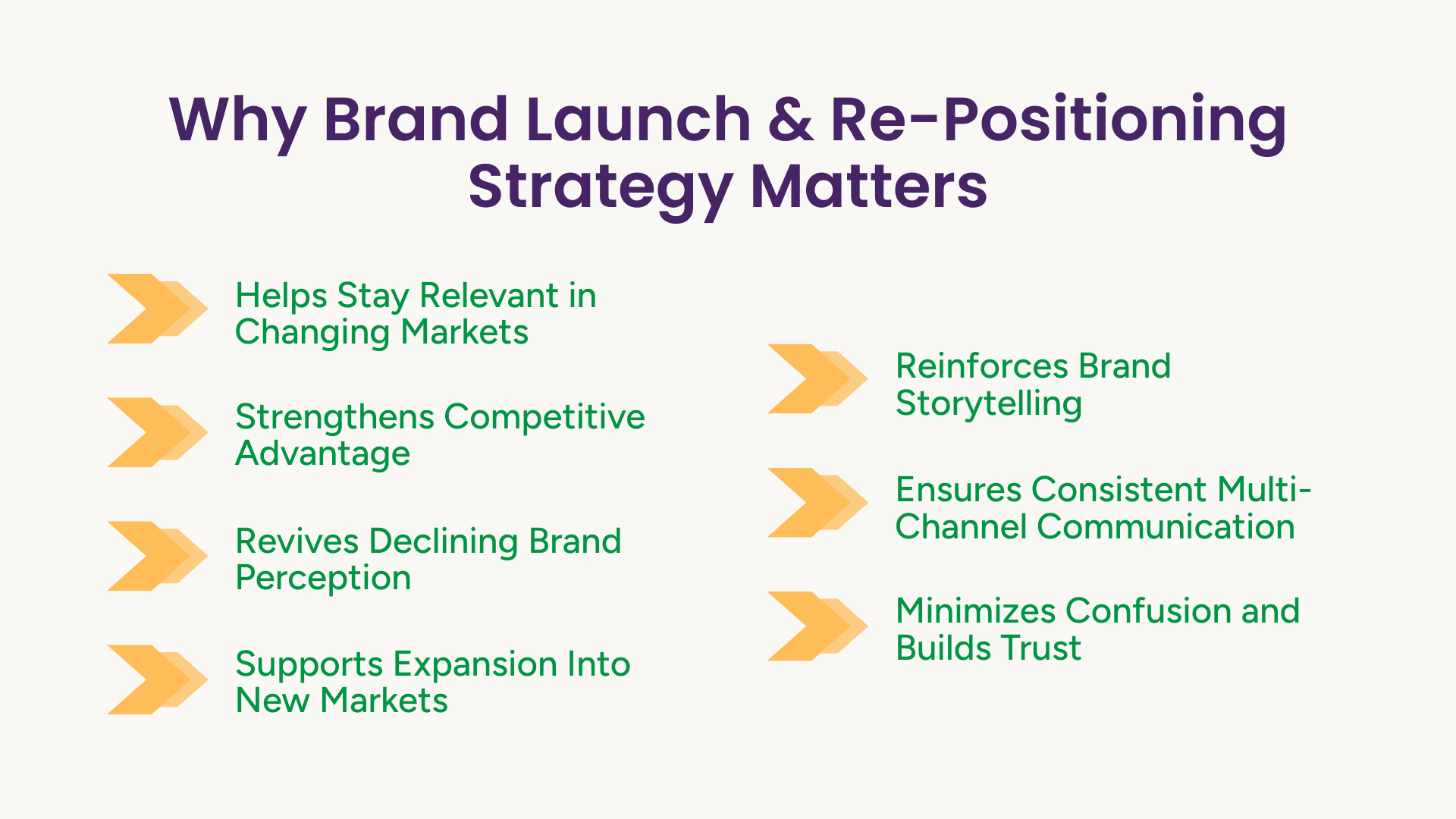
Why Brand Launch & Re-Positioning Strategy Matters
Being Relevant
Competitive Advantage
Brand Perception
Supports Expansion
Brand Storytelling
Consistent Communication
Builds Trust
Industries evolve rapidly, new competitors emerge, technology reshapes expectations, and audience behaviour transforms. Repositioning ensures your brand remains relevant instead of falling behind.
Brand launches help businesses differentiate effectively:
- A sharper message
- A more aligned audience focus
- A stronger promise
This creates room for better margins, improved loyalty, and faster growth.
Sometimes, even iconic brands lose momentum. Strategic repositioning revitalizes perception, wins back trust, and reintroduces the brand with renewed purpose.
When brands introduce new product lines or aim to reach different demographics, repositioning becomes necessary to reset audience expectations.
A relaunch allows brands to reshape their narrative, mission, values, personality and deliver a refreshed story that aligns with contemporary demands.
From digital assets to packaging and offline marketing, a launch strategy ensures every touchpoint shares the same message and identity.
A structured approach ensures customers clearly understand why the brand is evolving, preventing backlash or confusion.
Enter the market with clarity and confidence.
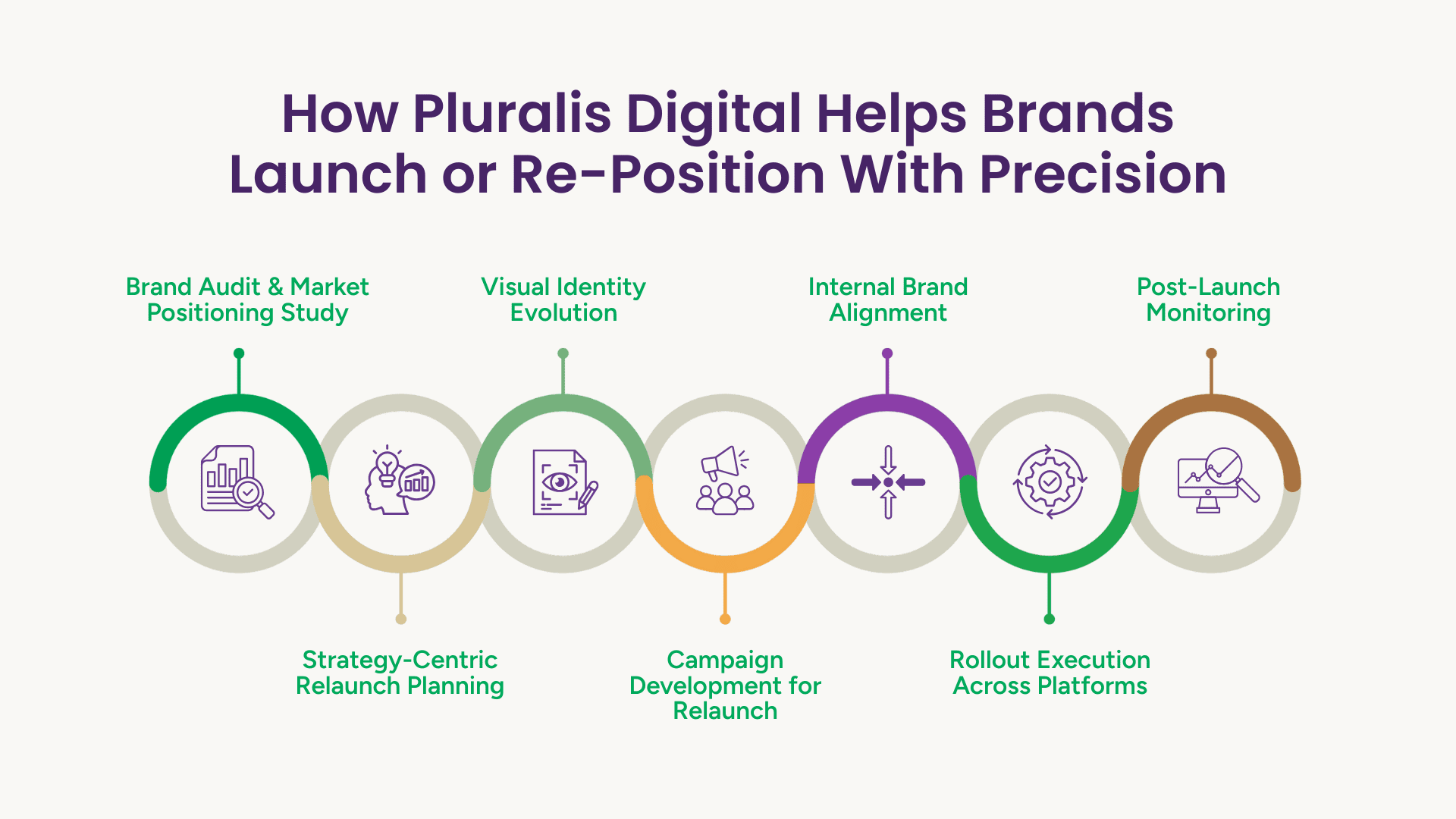
How Pluralis Digital Helps Brands Launch or Re-Position With Precision
At Pluralis Digital, we understand that relaunching a brand is more than a design exercise — it is a business transformation.
Let's Get Started
1. Brand Audit & Market Positioning Study
We begin by analyzing:
- Current perception
- Competitive landscape
- Target audience evolution
- Brand equity strengths & gaps
- Growth potential
This insight forms the foundation of your repositioning.
Let's Get Started
2. Strategy-Centric Relaunch Planning
We design a complete brand launch strategy, including:
- New messaging architecture
- Tone-of-voice positioning
- Visual identity refresh
- Campaign narratives
- Market rollout sequencing
- Digital-first activation plan
Let's Get Started
3. Visual Identity Evolution
Pluralis Digital ensures your new visual identity feels modern while still respecting your brand’s roots:
- Refined logo systems
- Updated colour palettes
- Typography guidelines
- Packaging refresh
- Digital and social media design systems
Let's Get Started
4. Campaign Development for Relaunch
We create adapted storytelling for:
- Launch teasers
- Reveal campaigns
- Content series
- Social amplification
- Performance-led ads
Let's Get Started
5. Internal Brand Alignment
A relaunch succeeds only if your entire ecosystem understands it. We help with:
- Internal brand onboarding
- Communication kits
- Training and guideline adoption
Let's Get Started
6. Rollout Execution Across Platforms
From website to outdoor media, we implement consistency across:
- Social media
- Landing pages
- Print and outdoor ads
- Store branding
- Digital campaigns
Let's Get Started
7. Post-Launch Monitoring
We track:
- Brand sentiment
- Engagement patterns
- Messaging resonance
- Channel performance
This allows faster optimization in the early stages of rebranding.
Enter the market with clarity and confidence.
FAQs: Brand Launch & Re-Positioning Strategy
1. What is the difference between brand launch and repositioning?
Brand launch builds a brand from scratch; repositioning redefines an existing brand to match new goals.
2. How long does a repositioning strategy take?
Typically 2–6 months depending on depth, research, design, messaging, and rollout.
3. Does repositioning risk losing old customers?
Only if done poorly. Strategic repositioning strengthens trust while attracting new audiences.
4. Should visual identity change during repositioning?
Not always. Sometimes messaging evolves; sometimes visuals. It depends on the brand’s needs.
5. Can small businesses benefit from repositioning?
Yes — even minor shifts in messaging or visuals can significantly improve perception.
6. What triggers the need for repositioning?
Market shifts, declining sales, new competition, expansion plans, outdated identity, or changing audience behavior.
7. Does Pluralis Digital handle full brand relaunch campaigns?
Yes — from research to strategy, design, communication planning, and rollout execution.
Conclusion
A successful brand launch or repositioning is not about reinventing yourself entirely, it is about evolving thoughtfully. When done strategically, it helps brands stay relevant, expand into new markets, and strengthen customer trust while preserving legacy.
The goal is simple: Evolve without losing the essence. Modernize without losing meaning.
Planning a brand launch or repositioning?