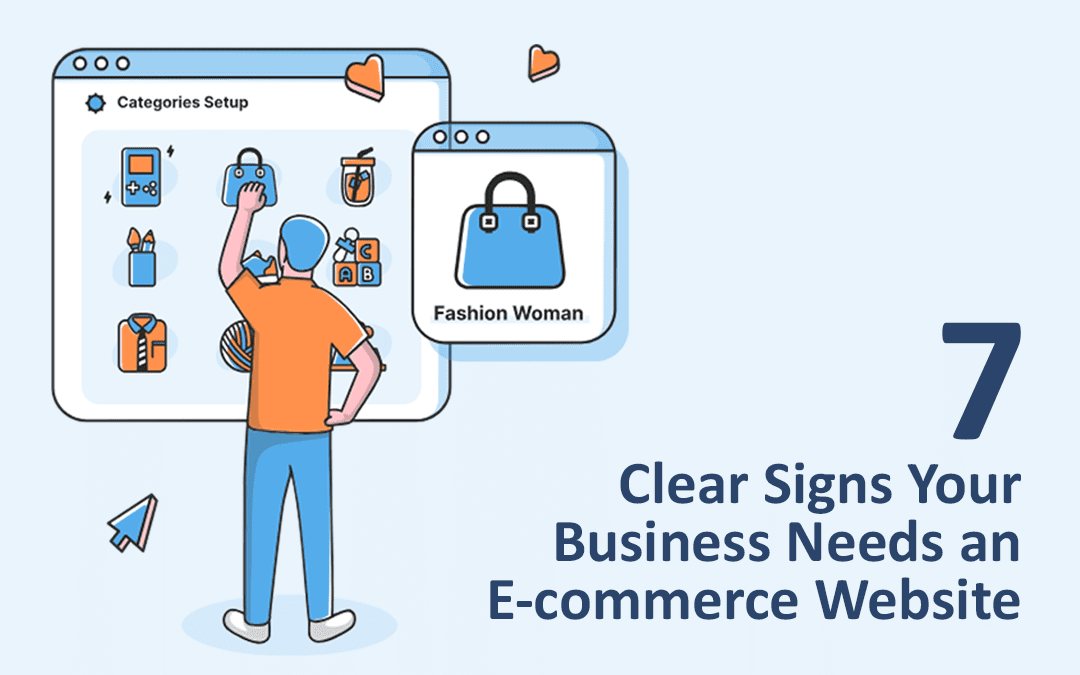


For many businesses, the decision to build an e-commerce website doesn’t come from ambition, it comes from necessity. The digital shift isn’t about replacing physical stores or sales teams; it’s about removing friction from the buying process. If your customers are ready to buy but your business isn’t ready to sell online, revenue quietly slips away.
Here are seven unmistakable signs that your business has outgrown offline selling and needs an e-commerce website to scale.
1. Your Customers Start Asking: “Do You Have a website?”
This question is no longer about credibility, it’s about convenience.
When customers ask if you have a website, what they’re really saying is:
- They want to browse before buying
- They want clarity on pricing
- They want to purchase on their own terms
Modern buyers are conditioned to research before committing. Even when the final sale happens offline, the journey begins online. Without a website, your business appears incomplete, forcing customers to rely on WhatsApp messages, PDFs, or phone calls, steps that often delay or kill the sale.
An e-commerce website gives customers instant access to your products, prices, and availability, without friction.
2. Your Competitors Are Already Selling Using E-commerce
If your competitors sell online and you don’t, the comparison isn’t even fair.

Customers subconsciously evaluate brands based on ease of purchase. When one business allows checkout in three clicks and another requires multiple messages and follow-ups, the decision is obvious. E-commerce is no longer a competitive advantage, it’s a baseline expectation.
Competitors with websites:
- Capture impulse buyers
- Operate beyond business hours
- Build trust through transparency
- Collect data to optimise pricing and inventory
Without an e-commerce presence, your business risks becoming invisible in a market that values speed and simplicity.
3. Your Leads Drop After Asking for Prices
This is one of the clearest warning signs.
If your leads go silent after asking:
- “How much does it cost?”
- “Can you share your price list?”
- “What are the available options?”
The issue is rarely pricing, it’s friction.
When customers have to wait for responses, negotiate manually, or process unclear information, interest fades. An e-commerce website solves this by:
- Displaying prices upfront
- Showing product variants clearly
- Offering instant checkout
Transparency builds trust, and trust drives conversions.
4. You Rely Too Much on Marketplaces
Marketplaces like Amazon, Flipkart, or Etsy are excellent for visibility, but dangerous when they become your only sales channel.
Over-reliance on marketplaces means:
- Platform commissions eat into margins
- Algorithms control your visibility
- Customer data doesn’t belong to you
- Policy changes can disrupt sales overnight
An e-commerce website gives you:
- Direct customer relationships
- Full control over branding
- Better margins
- Ownership of data and insights
Marketplaces should support your business, not define it.
5. Your Store Hours Limit Your Sales
Physical stores close. Websites don’t.
If your revenue depends on:
- Business hours
- Staff availability
- Manual order processing
You’re capping your earning potential.
E-commerce websites sell 24/7, while you sleep, travel, or focus on growth. Customers increasingly shop late at night, early morning, and during holidays. Without a website, those sales simply don’t happen.
An online store transforms time from a limitation into an advantage.
6. You Want to Expand Beyond Your Local Market
Growth rarely stays local.
If your business has demand outside your city, state, or country, an e-commerce website becomes the most efficient expansion tool. Instead of opening new stores or hiring sales teams, you can:
- Ship nationwide
- Sell globally
- Test new markets at low cost
E-commerce allows businesses to scale without scaling overheads. Geography stops being a boundary and becomes an opportunity.
7. You’re Spending on Ads But Not Converting
Running ads without an e-commerce website is like inviting people to a shop that doesn’t have a checkout counter.
If you’re spending on:
- Google Ads
- Instagram promotions
- Influencer campaigns
But struggling with conversions, the problem is often the landing experience.
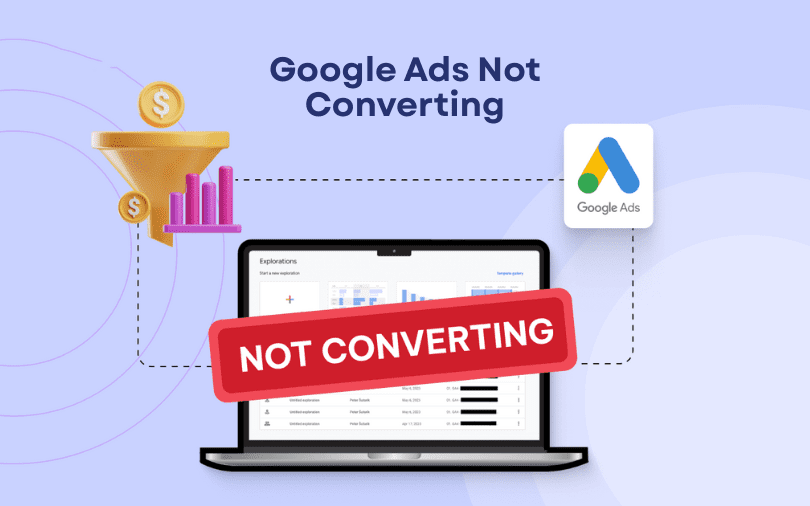
Sending users to WhatsApp chats, Instagram profiles, or generic pages adds friction. An e-commerce website:
- Matches ad intent
- Provides structured product information
- Tracks user behaviour
- Enables conversion optimisation
Ads perform best when users can act instantly.
Why an E-commerce Website Changes Everything
Beyond solving individual problems, an e-commerce website creates an ecosystem for growth.

Better Customer Experience
Customers prefer autonomy. Browsing, comparing, and purchasing without pressure improves satisfaction and trust.
Actionable Business Data
With analytics, you can track:
- Popular products
- Abandoned carts
- Customer locations
- Buying behaviour
Data-driven decisions outperform guesswork every time.
Scalable Sales
An e-commerce website grows with you, new products, categories, offers, and markets can be added without structural changes.
E-commerce Is No Longer Optional
If your business shows even three of these signs, it’s already losing opportunities.
Customers today expect:
- Speed
- Transparency
- Convenience
- Availability
An e-commerce website meets these expectations while giving your business control, credibility, and long-term scalability.
Conclusion
An e-commerce website isn’t just about selling online, it’s about removing friction, meeting customer expectations, and unlocking growth. When customers ask for a website, competitors sell online, leads drop after pricing conversations, ads don’t convert, or growth feels restricted, the message is clear.
Your business is ready for e-commerce.
The real question isn’t if you need an online store, it’s how much longer you can afford to wait.
Check out our blog on E-Commerce Prequisites for better retention and know-how of how to build an E-commerce website from scratch.