Is your UGC strategy helping customers make buying decisions, or confusing them? Many businesses invest in UGC expecting an increase in sales, only to be met with disappointment. This usually happens because they don't understand how to use UGC effectively, or how it differs from influencer marketing. Just as important, a UGC strategy that works for product-based businesses will not automatically work for service-based businesses.
Read on to understand more about UGC and how it differs between product businesses and service businesses.
What is UGC and why opt for it?
UGC, also known as User-Generated Content, is the content generated by real consumers or creators who are relatable to the audience. They are known as UGC creators. They are given products or get to experience service for free or at discounted prices. Popular UGC creators charge specific fees. Unlike influencers, audiences feel that they can easily relate and trust the UGC creators. Just like how proper contract with legal terms is made with influencers, similarly brands also make contracts with legal clauses with UGC creators.
How is UGC different from Influencer marketing?
In UGC, brands pay for the content itself, which is often posted on the brand's own page. The product or experience is reviewed as if a regular customer were using or experiencing it.
In influencer marketing, brands pay for the influencer's audience. Content is posted on the creator's own page, shot to a higher production standard, and blended organically into their personal brand, with the glam factor added.
UGC for product businesses
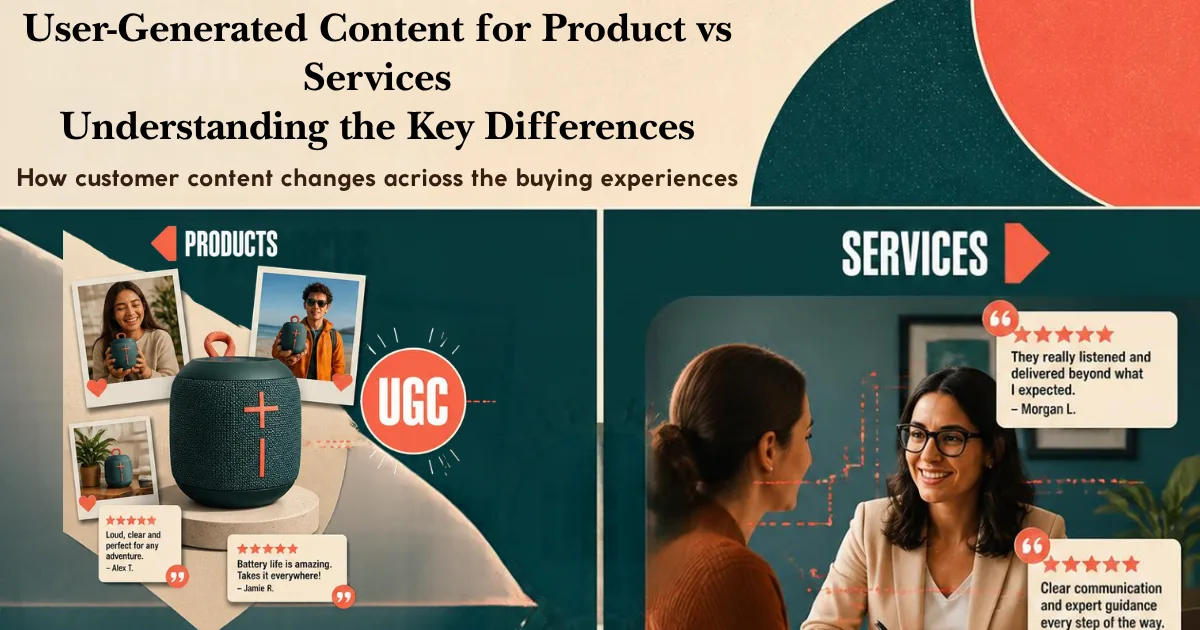
Product businesses have tangible products that can be seen and touched, so it's easy to show and demonstrate them. The product itself becomes the main part of the video, without creators needing to explain much.
UGC creators typically opt for product demonstrations, unboxing videos, how-to tutorials, and before-and-after usage videos. The primary goal is to create an impulsive desire for the product, by helping viewers understand what it looks like, how to use it, and how it feels once used.
Production is quick: once a creator receives the product, it just has to be opened, shot, and sent for approval.
UGC for service businesses
Service businesses provide intangible experiences that can't be seen or touched, but can be felt through emotion. So businesses focus on showing expertise, happy customers, and experience.
UGC creators here lean on before-and-after transformations, day-in-my-life vlogs, success stories, and testimonials. The primary goal is to show the brand's credibility and expertise in its specific industry, by showing real experience and outcomes that help build customer trust. Viewers get to see the service process, pricing, and results.
Production takes longer, since creators must first experience the entire service before reviewing and submitting it for approval.
UGC for Products vs Services
| Factor | UGC for Product Businesses | UGC for Service Businesses |
| Offering | Tangible products that can be seen and touched | Intangible experiences that cannot be seen or touched |
| Main Focus | Show the product and how it’s used | Show the experience, expertise, and customer outcomes |
| Goal | Create an impulsive desire to buy the product | Build trust, credibility, and confidence in the service |
| Content Style | Product demonstrations, unboxing videos, how-to tutorials, before-and-after usage videos | Before-and-after transformations, day-in-my-life vlogs, success stories, testimonials |
| Creator's Role | Demonstrate the product and its features | Share their personal experience and results after using the service |
| What Viewers Learn | What the product looks like, how to use it, and how it feels | The service process, pricing, customer experience, and outcomes |
| Storytelling | Product is the main focus of the video | Experience and transformation are the main focus of the video |
| Production Timeline | Faster: receive, shoot, and review the product | Slower: experience the full service before creating content |
Conclusion
There's no one-size-fits-all UGC strategy for product-based versus service-based businesses. Alongside these key differences, companies should also factor in their own goals, objectives, and budgets. This helps generate better leads and stronger ROI.
FAQ Section
Q1. What is the difference between UGC and influencer marketing?
A. UGC focuses on creating relatable content that audiences can trust, usually posted on the brand's own account. Influencer marketing focuses on the followers and reach of influencers, with content posted on their own accounts and blended into their personal brand to build awareness and drive conversions.
Q2. Is UGC better for product or service businesses?
A. UGC is effective for both, but the approach and strategy must differ. Product businesses benefit from demonstrations, unboxing videos, and tutorials, while service businesses perform better with testimonials, transformations, and experience-based content.
Q3. How do businesses choose the right UGC strategy?
A. The right UGC strategy depends on the type of your business, campaign goals, target audience, budget, etc. Product-based businesses should focus on showing product meanwhile service-based businesses should focus on showing experience and expertise.