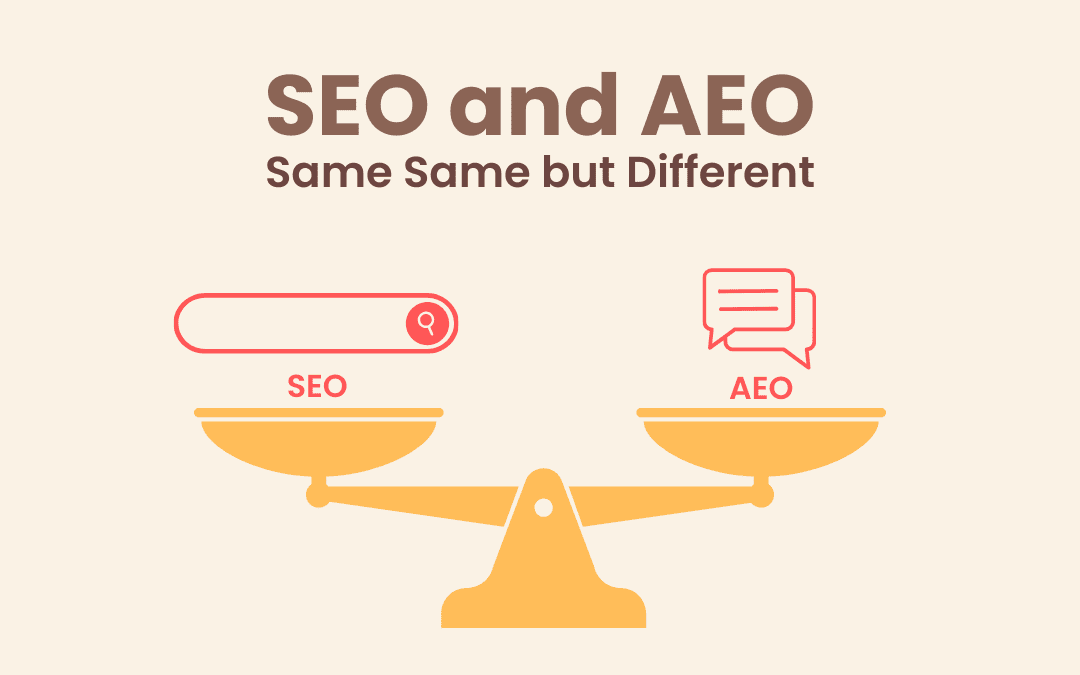


In today’s evolving search landscape, the way users find information online is changing fast. Traditional Search Engine Optimization (SEO) has long been the cornerstone of digital visibility, but the rise of artificial intelligence and voice-first search has given birth to Answer Engine Optimization (AEO), a contemporary approach focused on helping content become the answer rather than just rank high. While these concepts are connected, they are not identical; mastering both is essential to stay visible and relevant online.
Let’s unpack them, explore how they relate, and understand how they shape digital content strategy in 2025 and beyond. Search Engine People
What Is SEO?
Search Engine Optimization (SEO) is the practice of optimising your website so that search engines like Google and Bing can crawl, index, and rank it for relevant queries. SEO strategies focus on:
- Keywords, identifying terms users search for
- Content quality, informative, helpful, and relevant writing
- Backlinks, other websites linking to yours
- Technical health, site speed, mobile friendliness, meta tags, and structured data
The primary objective of SEO is to improve organic rankings and drive traffic to your site through search engine results pages (SERPs). It’s about visibility in traditional search. Semrush
What Is AEO?
Answer Engine Optimization (AEO) is a newer subset of search optimization. Instead of focusing on ranking for keywords on a results page, AEO focuses on helping your content appear as a direct answer, often before the user even clicks through to a website. AEO aims to get your content featured in:
- Featured snippets
- Knowledge panels
- Voice assistant responses (e.g., Siri, Alexa)
- AI-powered answer boxes and chat responses
AEO optimises content in question-and-answer formats, uses structured data, and emphasises clarity so that search engines and AI engines can extract and display answers directly to searchers.
As search increasingly delivers answers instead of lists of links, AEO positions your content front and centre, whether it earns a click or not. Semrush
– Secondary data (Research in secondary manner)
– What is SEO? What is AEO?
– Integration of AEO in SEO
– SEO vs AEO
– SEO vs AEO vs GEO
– Integration of AEO in content creation
– Hypothetical case study
UI/UX and Secondary Data: The Foundation of Both SEO and AEO
At the heart of both SEO and AEO lies user experience (UX). Great SEO used to emphasise keywords and backlinks. Today, how content feels to users and interprets semantically for AI systems is just as important. Clean layout, helpful headings, bullet lists, and fast page speed aren’t just good for visitors , they help machines understand your content’s structure too.
Likewise, secondary data research , drawing from reputable sources, linking to authoritative research, and aggregating context-rich information, signals credibility. This bolsters not only SEO but AEO performance, especially when AI systems evaluate the trustworthiness of content. Search Engine People
Effective optimisation for both strategies often begins with superior secondary research, ensuring your content is accurate, comprehensive, and relevant to what users truly intend to find.
Integration of AEO in SEO
Though different in focus, AEO and SEO are complementary.
Traditional SEO lays the groundwork, strong metadata, relevant topics, internal linking, and user-centric content. AEO builds on that by structuring content so that AI systems and voice assistants can recognise and extract direct answers. In other words, good SEO makes AEO possible, and AEO expands where your SEO visibility can show up. Semrush

For example, a well-optimised FAQ section can improve your site’s organic ranking (SEO), while also providing structured answers that can be pulled into featured snippets or voice responses (AEO). Semrush
SEO vs AEO vs GEO
Another term entering the optimisation lexicon is GEO (Generative Engine Optimization). While not as widely adopted as the other two, GEO focuses on helping generative AI platforms, like ChatGPT, Gemini, or Copilot, use your content when synthesising answers.
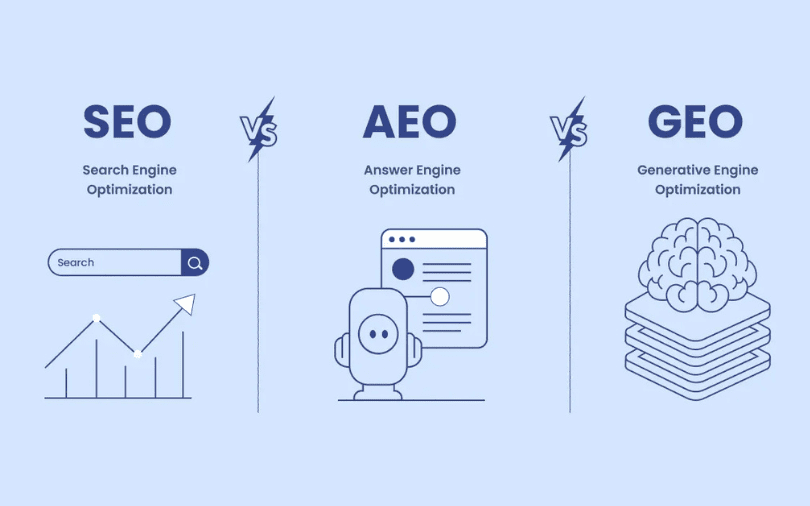
Here’s how they differ:
SEO
- Targets organic rankings in search results
- Uses keywords, backlinks, on-page and technical optimisation
- Aims to increase traffic to page
AEO
- Targets direct answers in search features
- Structures content to answer questions cleanly
- Aims to be the answer users see before click-through
GEO
- Focuses on making content easy for AI models to incorporate into AI-generated responses
- Emphasises semantic depth, trust, and entity authority
- Best for brands aiming to be part of AI narratives and answers beyond traditional search results Magneto IT Solutions
The three strategies overlap, strong SEO helps both AEO and GEO, but each has a distinct priority depending on how users are searching.
Integration of AEO in Content Creation

Adapting your content strategy for AEO means:
- Starting with a clear question and answer format
- Using schema markup like FAQ and HowTo to enhance machine readability
- Breaking content into bite-sized, AI-friendly sections
- Creating concise answers that align with conversational intent
For example, instead of just writing an industry overview, you might structure content around common user questions (“What is AEO?”, “How does AEO differ from SEO?”, “Why does AEO matter?”), giving machines definable answers they can use directly. Semrush
Hypothetical Case of Local Health Clinic
Imagine a local health clinic, HealthFirst Clinic, trying to attract more appointments.
SEO Strategy
They optimise their service pages with keywords like “health clinic near me”, include local signals like address and service hours, and build backlinks from local directories. This improves their organic search visibility for local queries.
AEO Strategy
Next, they publish FAQ content on topics like:
- “What to expect at a first health check-up?”
- “How often should adults get a health screening?”
Each answer is concise, structured with schema markup, and phrased in natural language. This allows voice assistants and featured snippets to pull these answers, potentially landing HealthFirst content even when searchers ask via voice commands. Semrush
GEO Layer
They also create in-depth guides on health topics. Because these guides are authoritative and semantically rich, generative AI systems cite the clinic in AI responses to broader health questions, indirectly elevating the brand’s visibility on platforms beyond traditional search.
Key Takeaway
SEO and AEO are not in competition, they are two sides of the same visibility coin. SEO lays the foundation of discoverability, while AEO ensures your content can be the answer when users ask questions in various formats, whether in a search engine, voice assistant, or AI interface. With GEO emerging as another layer, the future of search optimization is about being relevant, authoritative, structured, and ready for AI-driven discovery. In 2025 and beyond, your digital strategy should blend traditional SEO principles with AEO practices to ensure your content remains visible, no matter how users choose to search. Search Engine People