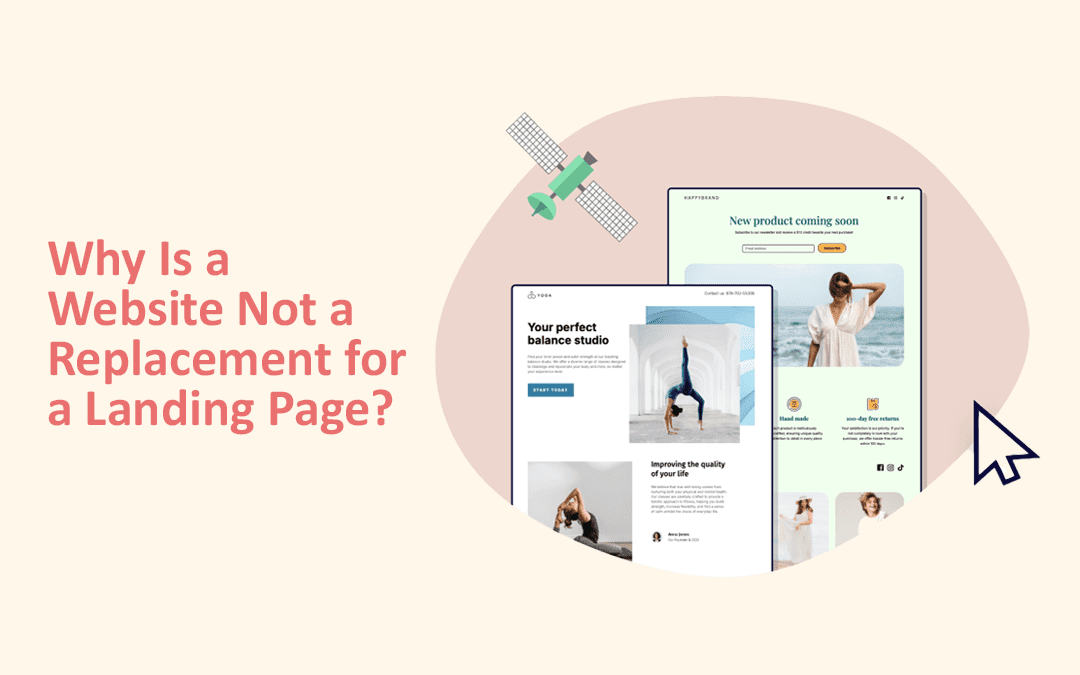


In digital marketing, one of the most common misconceptions is that a website can do everything a landing page does. While both are essential digital assets, they serve very different purposes. Treating them as interchangeable often leads to lower conversions, confused audiences, and wasted ad spend.
A website is designed to inform, build credibility, and rank organically. A landing page, on the other hand, is built to convert with intent. Understanding this distinction is critical for businesses running ads, launching campaigns, or driving targeted traffic.
Websites Are Built to Be Searchable and Rank Everywhere
A website is the digital headquarters of a brand. It exists to answer every possible question a visitor might have.
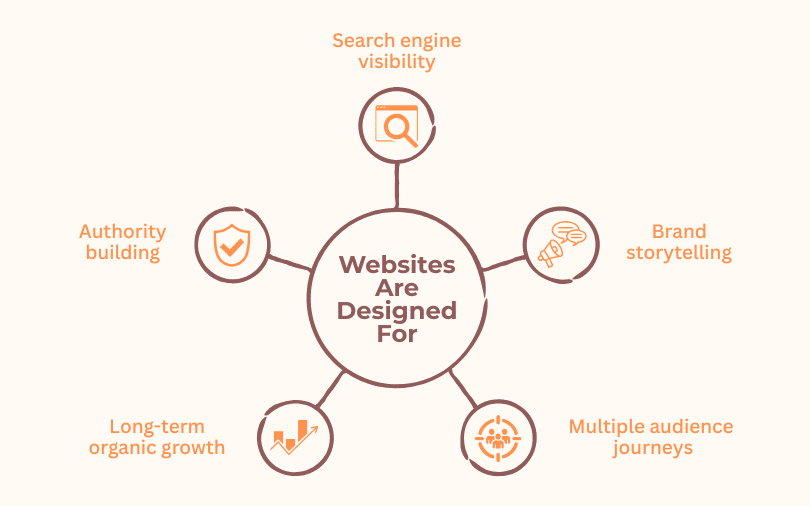
What Websites Are Designed For
- Search engine visibility
- Brand storytelling
- Multiple audience journeys
- Long-term organic growth
- Authority building
Websites are structured with:
- Multiple pages
- Navigation menus
- Blogs and resources
- About, services, careers, and contact sections
Search engines index websites holistically. Pages are interlinked, keywords are distributed across sections, and authority builds over time. A website invites exploration.
But exploration is not always what you want.
Landing Pages Are Purpose-Driven, Not Brand-Driven
A landing page is a conversion weapon. It is designed for one audience, one intent, and one action.
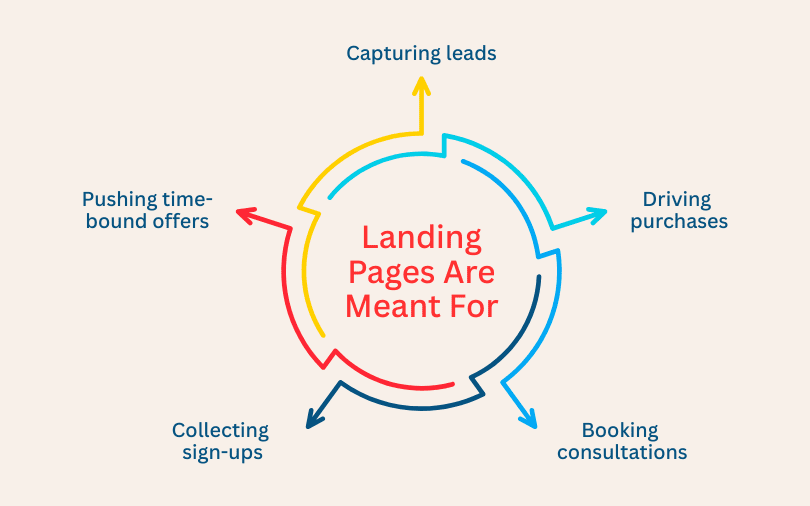
What Landing Pages Are Meant For
- Capturing leads
- Driving purchases
- Booking consultations
- Collecting sign-ups
- Pushing time-bound offers
Unlike websites, landing pages are not about discovery. They are about decision-making.
There is no “About Us” link. They do not have a blog menu. There is no navigation distraction.
The goal is simple:
Keep the user on one page and move them to act.
This is why landing pages sit inside the sales funnel, not the branding ecosystem.
Websites Invite Choice. Landing Pages Remove It.
A website offers multiple paths:
- Browse services
- Read blogs
- Check testimonials
- Compare offerings
A landing page removes all alternative paths.
It asks:
- Buy now
- Sign up
- Register
- Call us
- Download
This intentional limitation is what increases conversion rates. When users aren’t distracted, they decide faster.
Landing Pages Do Not Have Expiries, Campaigns Do
A common misunderstanding is that landing pages are temporary. In reality, landing pages don’t “expire”; their relevance changes based on objectives.
Example: Real Estate Developers
A builder’s main website remains constant, showcasing the brand, past projects, values, and contact information.
However, each new project gets its own landing page:
- Project-specific location
- Unit configurations
- Pricing
- Amenities
- Lead capture forms
When the project is sold out, the landing page dissolves or redirects, not because landing pages expire, but because the objective is complete.
The website remains and the campaign changes.
Landing Pages Drive Impulse Buying
Impulse buying thrives on simplicity. Landing pages are structured to:
- Highlight a specific offer
- Reduce cognitive load
- Remove unnecessary choices
Example: E-commerce Sales Pages
During sales or promotions, brands often:
- Group eligible products into a single category
- Direct ads to a focused landing page
- Simplify checkout flow
Instead of sending users to a full website with hundreds of options, landing pages curate just what needs to be sold now.
This focused design increases:
- Speed of decision-making
- Emotional buying
- Conversion rates
Websites are great for exploration. Landing pages are great for action.
Why Sending Ads to a Website Often Fails
Paid traffic behaves differently from organic traffic. When users click ads, they expect:
- Immediate relevance
- Clear value
- A direct next step
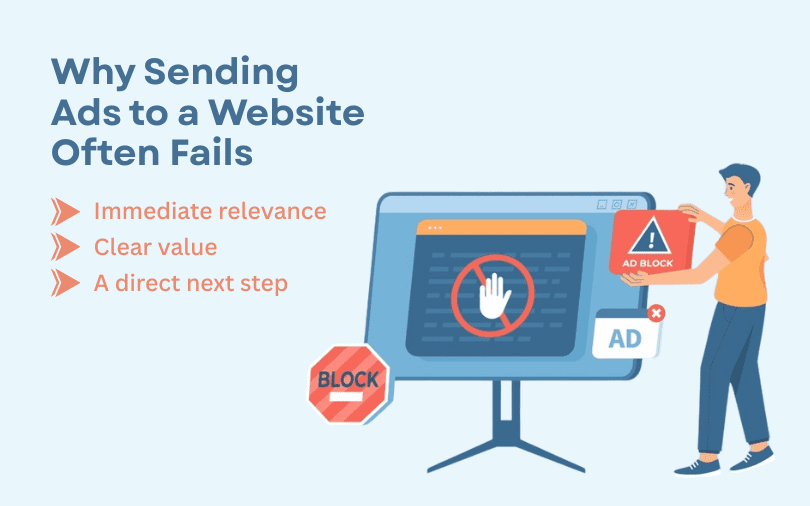
Sending ad traffic to a website homepage creates friction:
- Too many links
- No clear CTA
- Mismatch between ad promise and page content
Landing pages align perfectly with ad intent. The message in the ad is repeated, reinforced, and resolved on the page.
That alignment is what makes landing pages outperform websites in campaigns.
Event Planning: Where Websites and Landing Pages Work Together
Event marketing is one area where both assets coexist beautifully.
The Website’s Role
- Hosts the event overview
- Builds brand authority
- Showcases past events
- Acts as a permanent reference
The Landing Page’s Role
- Handles registrations
- Displays event-specific details
- Captures attendee data
- Drives urgency with deadlines
While event planning may appear similar in structure, the execution is different.
The website informs. The landing page converts.
Search vs Intent: The Core Difference
Websites target search behaviour. Landing pages target intent behaviour.
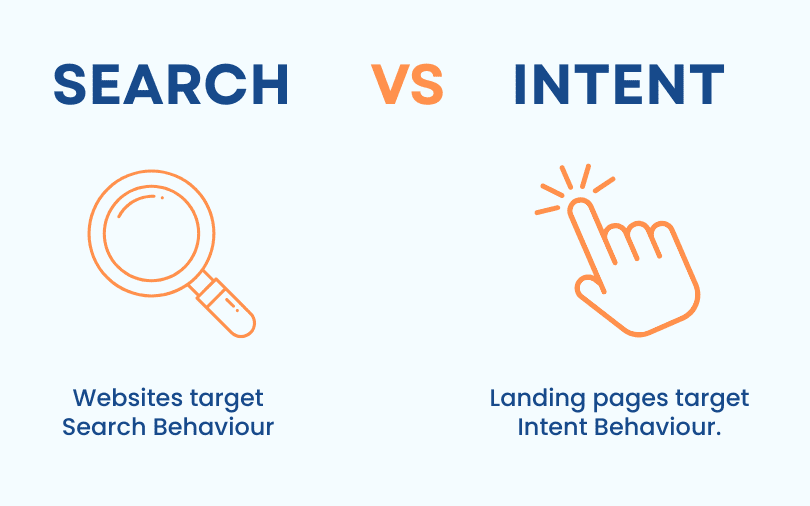
A website waits for users to find it. A landing page meets users where they already are, mid-decision.
This is why landing pages are often not heavily indexed or navigable. They exist to serve a moment, not a journey.
When You Need Both (And Most Brands Do)
The strongest digital strategies use both assets correctly.
Use a Website When
- Building brand credibility
- Ranking for multiple keywords
- Educating diverse audiences
- Supporting long-term growth
Use a Landing Page When
- Running ads
- Launching products
- Promoting events
- Capturing leads
- Driving conversions
One does not replace the other. They complete each other.
Conclusion
A website and a landing page are not competitors, they are collaborators with very different jobs. A website builds trust, authority, and visibility over time. A landing page captures intent, urgency, and action in the moment.
If you treat your website like a landing page, you dilute its purpose. If you treat your landing page like a website, you kill conversions. Understanding when to use each is what separates brands that get traffic from brands that get results.