It takes years of hard-work, dedication and consistency for a brand to build loyalty and trust with its customers. However, it takes decades of growth, understanding of relevance and reputation for these names to turn into legacy brands. Long-standing companies may have built their audience base using old-school marketing like billboards, newspaper ads, flyers, radio & tv commercials, etc. But to grow and stay relevant they need to venture into a new age of digital marketing.
Old-school marketing may have gotten legacy brands a loyal customer-base. However, to appeal and attract the next generation of customers they need to stay relevant and find new ways to connect with them.
Building a digital presence is one of the best ways to introduce your seasoned business to the younger audience, while simultaneously building social proof, trust and connection online with your future customers.
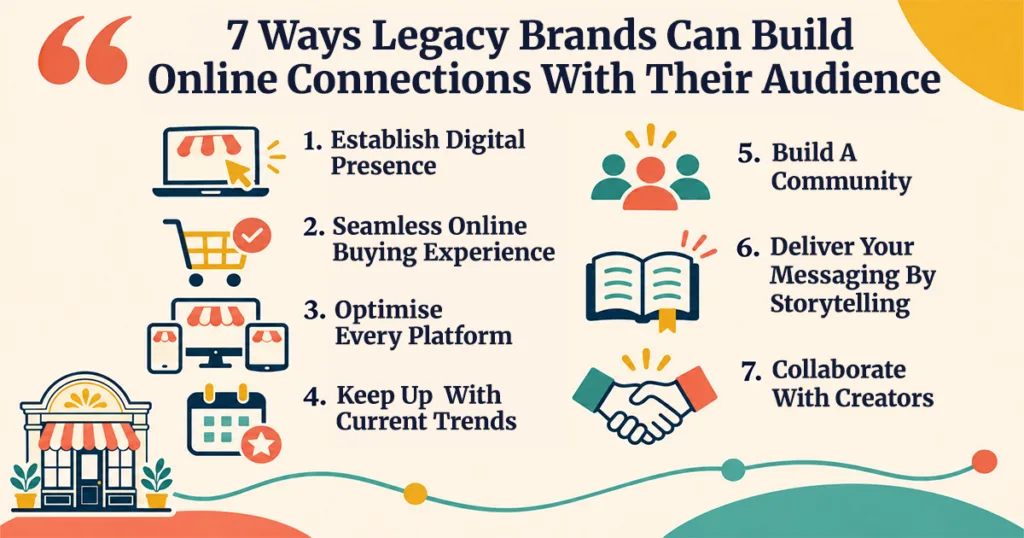
1. Establish Digital Presence
The first step to build an online presence is to have a website. Think of it as a business card found on the internet but much more detailed. The appearance of the site should match the look, feel and tone of your established brand. Ensure the website is compatible with high speed internet, has a mobile friendly layout, contains latest UI & UX elements, and includes SEO keywords as well as CTAs wherever they fit naturally.
2. Seamless Online Buying Experience
The online buying experience should be made seamless and intuitive for the customer. Make sure all the information provided is true and easy to understand. If there are distractions, frictions and obstacles during the purchase process the consumer might feel frustrated or discouraged to complete the transaction.
3. Optimise Every Platform
Every social media platform has their own demographic. Facebook is mostly used by older generations, whereas YouTube, Instagram and Snapchat are much popular with Gen Z and Gen Alpha. Moreover, different platforms help with different goals. Short-form videos are the most consumed format. You can create bite sized content which grabs audience attention and encourages engagement. On the other hand, long-form videos can provide detailed information for your audience and community to grow a deeper understanding and stronger connection.
4. Keep Up With Current Trends
Every week something new happens on the internet. Trends change in an instant. Your legacy brand must keep up with the current trends of the digital world. For example, the dairy company Amul has a cute little hand drawn mascot - the Amul Girl. They turn current events into an ad campaign by publishing an image or poster of the butter girl alongside a witty copy. Although, if the topic doesn't fit your brand image, don’t force the integration.
5. Build A Community
Engage with your audience by replying to comments under social media posts and answering direct messages by customers. Furthermore, create online groups, digital channels and interactive spaces for your audiences to chat and reach out easily. This two-way communication makes the legacy brand feel personal and approachable. Doing so lets your audience know that their feedback is being considered and valued.
6. Deliver Your Messaging By Storytelling
TV commercials create brand awareness, while YouTube videos help to build a deeper bond with the audience. However, with the decreasing attention-span of the younger generation, the internet keeps inventing new ways for innovative storytelling. Micro-dramas are the newest forms of creative storytelling. The episodes are under three minutes, with high emotional arcs and seamless product integration. The plot matters more than the product to the audience. However, a well-written story will keep the viewers hooked, and episodic nature will call back the audience. This pattern of storytelling creates an emotional and trusting relationship between the legacy brand and its customers.
7. Collaborate With Creators
Audiences are more likely to trust a human presence online than a brand logo. Content creators and influencers will convey your message with authenticity, relatability, humour and warmth. This helps the legacy brand with building social proof as the creators can demonstrate your products or services in their content.
Conclusion
Legacy brands shouldn't have to completely give up traditional marketing, rather look at building an online presence as an extension of their established brand legacy. There are more advantages to digital marketing other than gaining new customers and building connections. Brands can gain useful information from their audience by monitoring how they interact, what they like/dislike, taking in feedback, analyzing demographics and much more.
FAQ Section
Q1. What is a legacy brand?
A. A legacy brand (also called a heritage brand) is an older, long-standing company or product name that has been on the market for decades, often passed down through generations or acquired, and holds deep trust, recognition, and history with consumers.
Q2. Why do legacy brands struggle with online connections?
A. They often rely on physical foot traffic, word-of-mouth, or old school marketing. Shifting to digital and creating online connections requires a cultural change, familiarity with current events, two-way interactions, active and authentic media presence.
Q3. How can a legacy brand build digital trust without losing its heritage?
A. They can share "behind-the-scenes" origin stories, showcase craft or archival history, highlight customer testimonials, and maintain the core values and quality that made them trusted offline in the first place.
Q4. What are the best digital channels for traditional legacy brands?
A. It depends on the audience, but a strong mix typically includes a good performing website, community-focused social media (like Instagram, LinkedIn, or YouTube), personalized email newsletters, and responsive customer service chat.
Q5. How do you transition older, traditional customers to online platforms?
A. Make the digital experience simple and transparent. Offer clear video tutorials, dedicated customer support helplines, and seamless cross-channel perks (like buying online and picking up in-store).